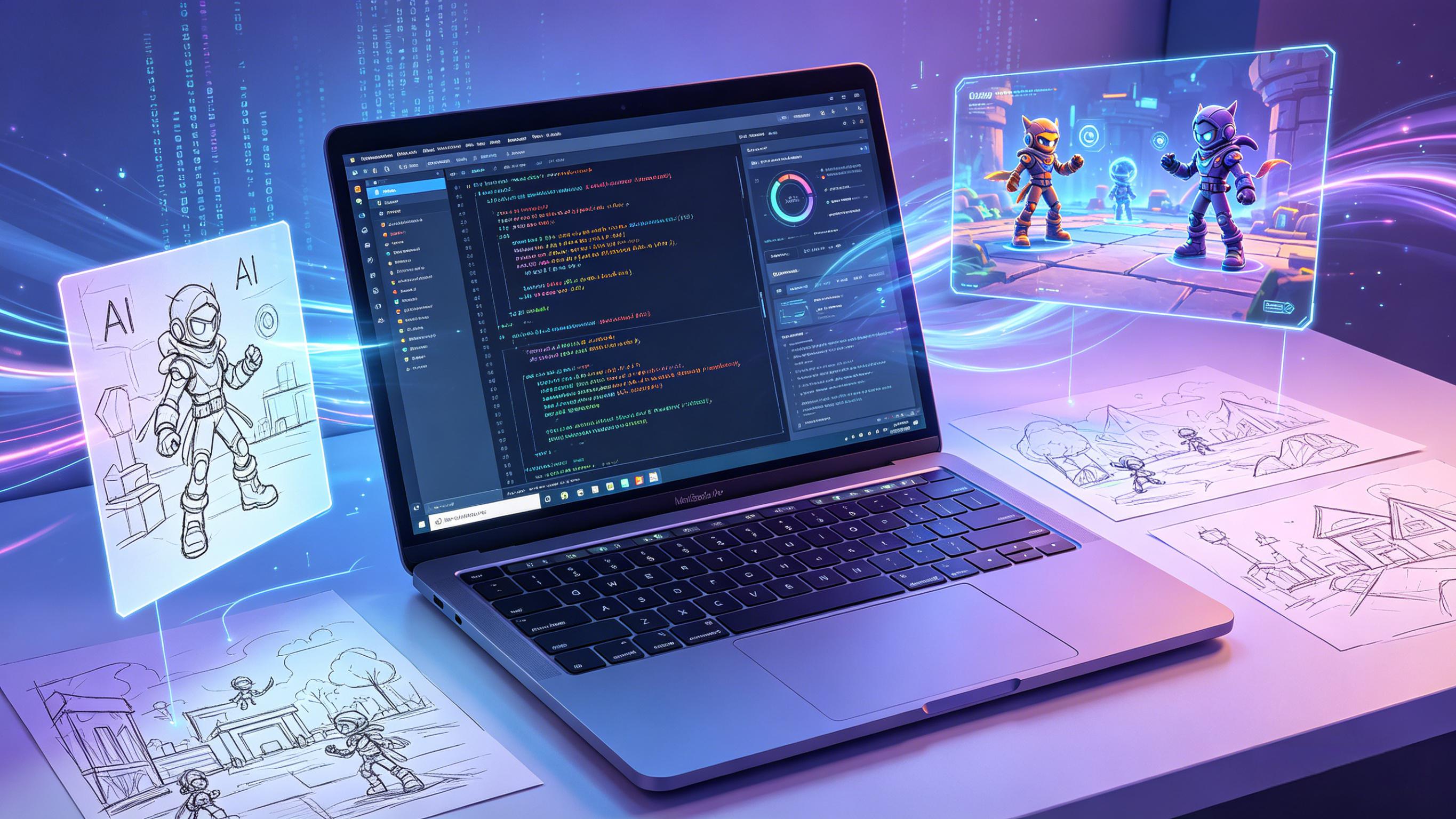
The AI Revolution in Game Development
Artificial intelligence is transforming nearly every industry, and game development is no exception. For indie game developers, AI represents both incredible opportunities and significant challenges. As AI tools become more accessible and powerful, they're reshaping the landscape of independent game creation in profound ways.
The Double-Edged Sword: Lowered Barriers, Increased Competition
One of the most immediate impacts of AI on indie game development is the dramatic lowering of technical barriers:
Lowered Development Barriers
AI tools are democratizing game development in unprecedented ways:
- Programming assistance: AI code assistants can help with everything from debugging to writing entire features, reducing the need for advanced programming expertise.
- Art generation: Tools like MidJourney, DALL-E, and Stable Diffusion can create concept art, sprites, textures, and even animations in seconds.
- Sound and music: AI can generate sound effects, background music, and even voice acting, eliminating the need for expensive audio production.
- Level design: AI can assist with procedural generation, level layout, and playtesting to identify issues.
Increased Market Competition
While these tools make game development more accessible, they also create new challenges:
- Market saturation: With lower barriers to entry, more games are being released than ever before.
- Stagnant player base: The number of game players isn't growing at the same rate as the number of games being released.
- Unchanged revenue pool: The total amount of money spent on indie games hasn't increased proportionally to the number of games available.
The unfortunate reality is that while it's easier than ever to make a game, it's not necessarily easier to make money from one. The market has become significantly more competitive, making it harder for any single game to stand out.
AI's Impact on Different Developers
AI affects different segments of the indie game development community in different ways:
New Indie Developers: A Golden Opportunity
For those just starting out, AI is a game-changer. Previously, aspiring indie developers faced a steep learning curve:
- Months or years of learning to program
- Developing artistic skills or finding collaborators
- Learning sound design and music composition
- Understanding game engines and development workflows
Today, AI tools allow new developers to create functional games with minimal technical expertise. While creating a truly exceptional game still requires skill and dedication, the barrier to creating a basic, playable game has never been lower.
Established Studios: AI as a Productivity Tool
For mature indie studios and game companies, AI serves a different purpose. These teams already have the expertise to create high-quality games, but players often resist obvious AI-generated content.
Instead of replacing human creativity, established studios use AI as an assistant:
- Automating repetitive tasks
- Speeding up iteration cycles
- Reducing development costs
- Freeing up creative team members to focus on higher-level work
By using AI strategically, these studios can maintain their quality standards while becoming more efficient, ensuring their sales remain strong despite market changes.
The Rising Importance of Game Design
As AI takes over more technical aspects of game development, one role is becoming increasingly critical: the game designer.
Why Game Design Matters More Than Ever
When AI can handle programming, art, sound, and other technical tasks, what determines a game's quality? The answer is design—the creative vision that ties everything together.
Game design encompasses:
- Core gameplay mechanics
- Level progression and difficulty curves
- Player experience and emotional arc
- Worldbuilding and storytelling
- Player feedback and iteration
Can AI Create Great Game Design?
This raises an important question: can AI create exceptional game design? The answer is complex.
AI can certainly analyze existing games, identify patterns, and generate design suggestions based on what's worked before. It can help with balancing, playtesting analysis, and even suggesting mechanics.
But creating truly innovative, groundbreaking game design remains a human endeavor. Consider this: could today's AI have designed the successful indie games of tomorrow? Probably not.
Why? Because "fun" is an elusive concept that even humans struggle to define and understand consistently. AI works by pattern recognition and learning from existing data, but truly innovative games often break established patterns and create something entirely new.
The most exciting games often come from unexpected places—from designers who think differently and challenge conventions. This kind of creative leap is something AI isn't yet capable of.
The New Reality: Floors and Ceilings
We can summarize AI's impact on indie game development in terms of floors and ceilings:
AI Raises the Floor
AI ensures that the baseline quality of indie games is higher than ever. Even inexperienced developers can now create games that are functional, look decent, and sound good. The days of amateurish, barely playable indie games are becoming less common.
Humans Define the Ceiling
While AI raises the floor, the upper limits of game quality still depend on human creativity. The most innovative, emotionally resonant, and culturally significant games will continue to be primarily human creations. AI can help realize these visions, but the vision itself comes from people.
Navigating the AI-Powered Future
So what does this mean for indie game developers today? Here's how to thrive in this new landscape:
For New Developers
- Embrace AI tools: Don't be intimidated by technical barriers—use AI to bring your ideas to life.
- Focus on design: Since technical skills are less of a barrier, invest time in learning game design principles.
- Iterate quickly: Use AI to speed up your workflow and test more ideas.
- Find your unique voice: In a crowded market, authenticity and creativity stand out.
For Experienced Developers
- Use AI as a tool, not a replacement: Let AI handle repetitive tasks while you focus on creative work.
- Double down on design: This is your competitive advantage—invest in making your game design exceptional.
- Maintain quality standards: Players can spot AI-generated content, so use it thoughtfully.
- Build your brand: A strong reputation can help you stand out in a crowded market.
Looking Ahead
The AI revolution in game development is just beginning. As tools become more sophisticated, we'll see even more changes to how games are made. But some things will likely remain constant:
- Players will always crave unique, memorable experiences
- Creativity and innovation will continue to be valued
- The best games will still require passion, dedication, and human insight
Sources & Research Notes
This analysis of AI's impact on indie game development draws on industry research and developer commentary.
- AI Tool Developers — Official announcements and documentation from AI tool developers
- Industry Surveys — Surveys on AI adoption and usage trends in game development
- Developer Case Studies — Post-mortems and case studies from studios using AI tools
- Market Analysis — Research reports on AI in gaming and market trends
Note: AI technology is rapidly evolving. This analysis reflects our understanding at the time of writing and is for educational purposes.
Conclusion
AI is transforming indie game development in profound ways, creating both opportunities and challenges. It's lowering barriers for newcomers while increasing competition for everyone. It's automating technical tasks while making human creativity more important than ever.
For new indie developers, this is an incredibly exciting time. You have tools at your disposal that would have been unimaginable just a few years ago. You can focus on bringing your creative vision to life without getting bogged down in technical details.
For experienced developers, AI is a powerful productivity tool that can help you work faster and more efficiently. But your greatest asset remains your creative vision and your ability to design games that resonate with players.
In the end, AI raises the floor of what's possible in indie game development, but the ceiling—those truly exceptional, genre-defining games—will continue to be defined by human creativity. And that's something worth celebrating.