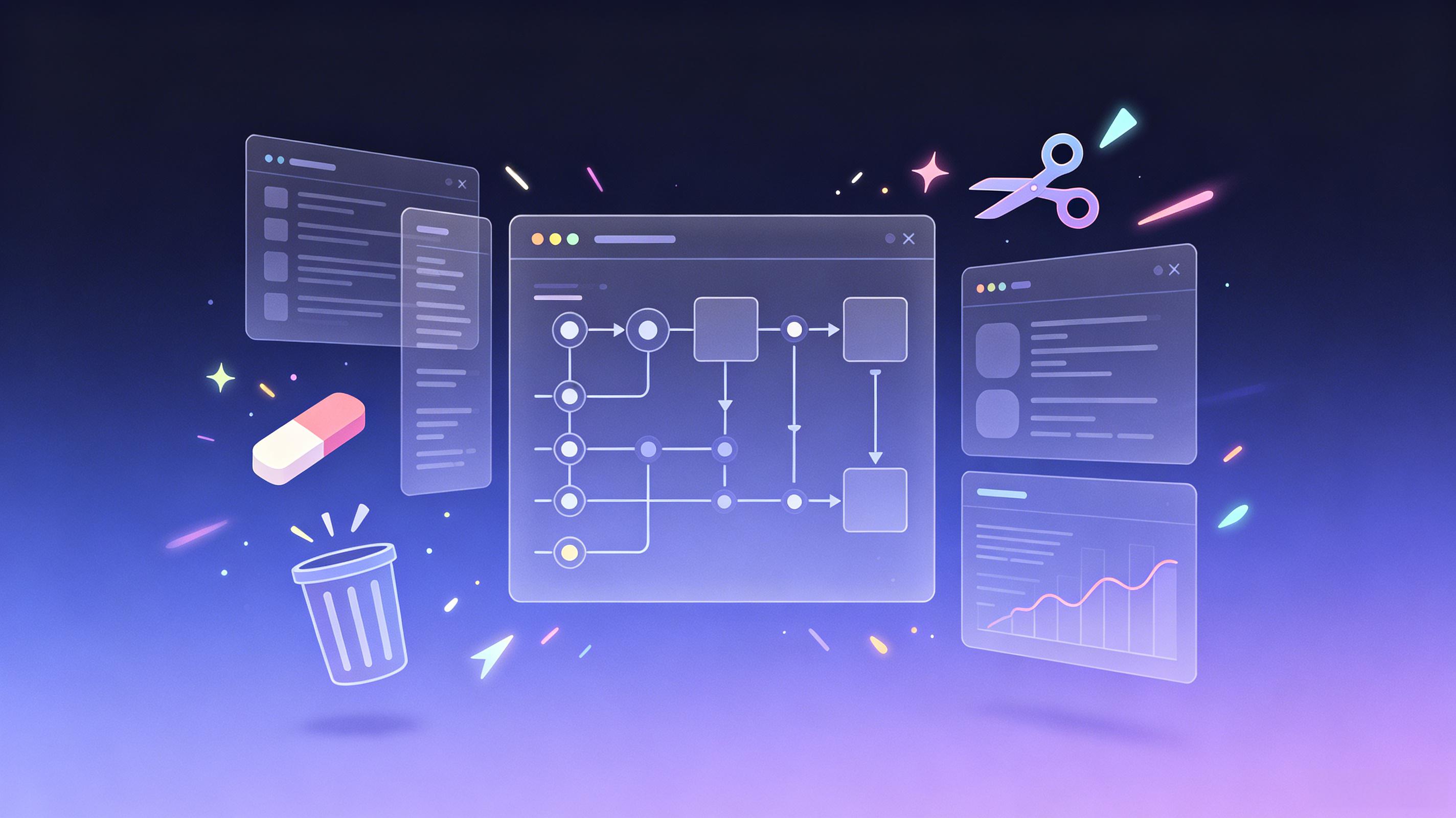
The game development world was rocked when Epic Games officially unveiled Unreal Engine 6 at the Rocket League Championship Series Paris Major in May 2026. While UE5 focused on revolutionizing graphics with Nanite and Lumen, UE6 represents something potentially even more transformative: a fundamental shift in how games are developed. By removing Blueprints and embracing a code-first approach with the Verse language, Epic is positioning Unreal Engine for the AI era—and indie developers stand to benefit the most.
The End of Blueprints: A Return to Code
Perhaps the most controversial announcement about UE6 is the phasing out of Blueprints, Unreal Engine's iconic visual scripting system. While Blueprints will still work in early versions of UE6, Epic has made clear that they will be deprecated as the new Verse-based framework matures.
This decision has sparked heated debate in the Unreal community. After all, Blueprints have been a cornerstone of Unreal's appeal, especially for non-programmers. Artists, designers, and hobbyists could build gameplay without writing a single line of code. So why remove them?
The answer lies in AI. As powerful as Blueprints were for human creators, they're notoriously difficult for AI assistants to work with. Visual scripting doesn't translate well to the text-based interface of AI tools like ChatGPT or Claude. Code, on the other hand, is AI's native language.
Enter Verse: The Language of the AI Era
Replacing Blueprints at the heart of UE6 is Verse, Epic's purpose-built programming language originally developed for Fortnite Creative and Unreal Editor for Fortnite (UEFN). Verse represents a significant evolution in game development languages, with several key advantages:
Designed for AI Collaboration
Verse's clean, readable syntax is not just human-friendly—it's AI-friendly. The language's consistent structure and strong typing make it much easier for AI assistants to generate correct, production-ready code. Developers can describe what they want in natural language, and AI can produce reliable Verse code that integrates seamlessly with the engine.
Built for Networked Experiences
One of Verse's most revolutionary features is its built-in support for networking and concurrency. In traditional game development, creating multiplayer games requires extensive knowledge of network synchronization, replication, and server architecture—a massive barrier for indie developers.
With Verse, this changes dramatically. Developers can write gameplay logic as if it were single-player, and Verse handles the complex work of network synchronization, cross-server distribution, and concurrency automatically. What used to require a team of specialized engineers can now be handled by a single developer with AI assistance.
Similar to Python and C#
Epic has designed Verse to be approachable for developers familiar with Python or C#. This lowers the learning curve significantly, especially for indie developers who may not have deep C++ experience. Combined with AI assistants that can explain code concepts and generate examples, getting started with Verse is more accessible than ever.
Unreal Engine 6's Major Improvements
Beyond the shift to Verse and code-first development, UE6 brings a host of improvements that will dramatically boost developer productivity:
Unified Editor: One Tool for Everything
UE6 merges the traditional Unreal Editor with Unreal Editor for Fortnite (UEFN) into a single unified platform. This means you can build a game once and publish it everywhere—PC, console, mobile, and even within the Fortnite ecosystem. For indie developers, this is a game-changer. No more maintaining separate codebases or dealing with platform-specific quirks. Build once, deploy everywhere.
Verse Scene Graph: Better Performance, Better Workflow
UE6 introduces a new Verse Scene Graph, a modern component framework that brings proper prefab workflows and composition to Unreal Engine. In the past, managing assets, materials, and effects could be disjointed—change a parameter in one place and you'd have to manually update code elsewhere.
With the Verse Scene Graph, everything is part of a unified, statically-verifiable system. The compiler can catch errors before you hit play, and changes automatically propagate throughout your project. This doesn't just improve reliability—it dramatically speeds up iteration time, especially when working with AI-generated assets and code.
Multiplayer Made Simple
As mentioned earlier, UE6's Verse-based architecture revolutionizes multiplayer development. The engine handles network replication, server distribution, and concurrency at a fundamental level. For indie developers who've dreamed of making multiplayer games but lacked the engineering resources, UE6 removes what was perhaps the single biggest barrier.
Imagine building a multiplayer game as easily as you'd build a single-player experience. That's the promise of UE6—and with AI assisting with code generation, even solo developers can create ambitious online games.
True Multithreading
UE6 finally breaks through the single-threaded simulation bottleneck that has limited Unreal Engine for years. With engine-level multithreading, gameplay logic can spread across multiple CPU cores efficiently. This means better performance, more actors on screen, and more complex simulations—all without requiring manual optimization work that indie developers often can't afford.
Easier Content Porting
Content created in UE6's unified framework is inherently more portable between projects. The Verse Scene Graph's standardized structure means assets and systems move between games more easily. For indie developers building multiple projects or leveraging marketplace assets, this means less time wrangling compatibility issues and more time making games.
The AI Workflow Revolution: 10x Productivity?
Here's where things get really exciting for indie developers. The combination of UE6's code-first approach and rapidly improving AI tools could unlock productivity gains that were previously unimaginable. Estimates of 10x improvement are not unrealistic—here's why:
Programming: From Idea to Code in Seconds
With Verse's clean syntax and AI's code generation capabilities, what used to take hours of programming can now be done in minutes. Describe the gameplay mechanic you want, and AI can generate the Verse code to implement it. Debugging? AI can analyze error messages and suggest fixes. Optimization? AI can identify performance bottlenecks and propose improvements.
This doesn't eliminate the need for programming knowledge—you still need to understand what you're building and be able to evaluate AI-generated code. But it dramatically reduces the amount of manual coding required, letting you focus on design and creativity.
Art and Assets: AI-Powered Creation
AI art generation tools are already revolutionizing game art, and UE6's unified pipeline makes integrating AI-generated assets easier than ever. From concept art to textures, from 3D models to animations, AI can produce production-ready assets at a fraction of the time and cost. For indie developers who can't afford a team of artists, this levels the playing field dramatically.
Level Design: Worlds Built Faster
AI-assisted level design is another area where productivity will skyrocket. AI can generate procedural environments, populate worlds with details, and even suggest layout improvements. What used to take weeks of manual level design work can now be accomplished in days—or even hours—with AI handling the heavy lifting while you focus on the creative vision.
UI and UX: Rapid Iteration
User interface design, often a bottleneck for indie developers, becomes much faster with AI. Generate UI mockups, create HUD elements, design menus—AI can produce variations quickly, and Verse code can implement them without manual widget construction.
Game Design and Balancing: AI as Design Partner
AI isn't just for production—it can help with design too. Test balance suggestions, simulate gameplay outcomes, analyze player behavior patterns, and iterate on mechanics faster. While AI can't replace good game design intuition, it can dramatically reduce the time spent on testing and balancing.
Why This Is Great for Indie Developers
Perhaps the most exciting implication of UE6 and the AI workflow era is what it means for indie developers. For too long, indie teams have been at a massive disadvantage compared to AAA studios, limited by resources, team size, and technical capacity. The AI + UE6 combination starts to close that gap in fundamental ways:
Bigger Games, Smaller Teams
Indie developers will be able to create games of significantly larger scope than ever before. What used to require a team of 10-20 people might become achievable by a team of 2-3—or even a single talented developer. The combination of UE6's built-in systems (networking, multithreading, etc.) and AI's productivity boost means indie games can punch far above their weight class.
Lower Barrier to Entry
While Blueprints are going away, the overall barrier to entry might actually decrease. Why? Because AI can teach you to code. If you're a designer or artist who always wanted to learn programming but found it intimidating, AI tutors can guide you through Verse at your own pace. The combination of approachable language syntax and AI assistance makes coding more accessible than ever.
Faster Prototyping
For indie developers, the ability to quickly prototype and test ideas is crucial. UE6 plus AI means going from concept to playable prototype in hours instead of weeks. This rapid iteration lets you explore more ideas, fail faster, and ultimately find the winning concept that will make your game a success.
The AAA-Quality Promise
Here's the bold prediction: as AI tools continue to improve and UE6 matures, we could reach a point where individual developers can create games with production values comparable to today's AAA titles. That's not to say every indie developer will make The Witcher IV in their bedroom—but the gap between what an individual can achieve and what a AAA studio produces will narrow dramatically.
Think about it: UE6 already provides the engine foundation equivalent to what AAA studios use. AI provides the production capacity. What's left? Creative vision, game design, and project direction—exactly the areas where talented indie developers can shine.
What This Means for You Right Now
UE6 isn't here yet—preview builds are expected in late 2026 or early 2027, with a stable release likely in 2027-2028. But that doesn't mean you should wait. Here's what indie developers can do now to prepare:
Learn to Work with AI
Start incorporating AI tools into your workflow today. Practice using AI for code generation, art creation, and design brainstorming. Develop the skill of writing effective prompts and evaluating AI output. This is the most important skill for the next era of game development.
Embrace Code
If you've been relying on Blueprints, now is the time to strengthen your coding skills. Even if you're not programming full-time, being able to read, understand, and modify code will be essential in the UE6 era. Start with Python or C#—they'll give you a foundation that transfers well to Verse.
Focus on Design and Creativity
As execution becomes easier thanks to AI, the value of good ideas and creative vision only increases. Spend time developing your design skills, studying what makes games great, and cultivating your unique creative voice. In the AI era, execution is cheap—vision is priceless.
Stay Informed About UE6
Keep an eye on UE6 development. Follow Epic's announcements, experiment with Verse in UEFN if you have access, and start thinking about how you might transition your projects and workflows. You don't need to move to UE6 day one, but being prepared will put you ahead of the curve.
The Future Is Bright (and Productive)
Unreal Engine 6's shift away from Blueprints toward code-first development with Verse represents more than just an engine update—it's a signpost pointing to the future of game development. A future where AI handles much of the heavy lifting, where developers focus on creativity rather than implementation, and where indie developers can compete at scales previously unimaginable.
Yes, change can be scary. The end of Blueprints will require many developers to learn new skills and adapt their workflows. But the potential upside—10x productivity, bigger games, lower barriers to entry, and a level playing field for independent creators—is worth it.
The AI workflow era is beginning. The question isn't whether you'll adapt—it's what amazing games you'll create with these new superpowers.