A Game of Layers
Animal Well looks, at first glance, like a charming pixel-art platformer. You play as a small blob exploring a mysterious underground world filled with animals, mechanisms, and environmental puzzles. But this surface simplicity is deliberately misleading.
The game operates on multiple layers of discovery. The initial playthrough reveals maybe 30% of what the game contains. Dedicated players have spent months uncovering hidden secrets, meta-puzzles, and mysteries that the developer, Billy Basso, embedded deep within the game's fabric.
1. The Art of Mystery
In an era where most games explain everything through tutorials, tooltips, and objective markers, Animal Well tells you almost nothing. There's no dialogue, no text logs, no quest journal. You're dropped into a world and left to figure it out.
This design choice is powerful because it:
- Respects the player's intelligence — it trusts you to observe, experiment, and learn
- Creates genuine discovery moments — every insight feels earned, not given
- Generates community engagement — players share discoveries and theories, building a collective knowledge base
- Extends the game's lifespan — secrets keep emerging weeks and months after launch
For indie developers, this is a reminder that withholding information can be more engaging than providing it. When players have to work for understanding, they value it more deeply.
2. Puzzle Design That Rewards Observation
Animal Well's puzzles aren't about reflexes or pattern memorization — they're about paying attention. The game hides solutions in plain sight: background details, animal behaviors, environmental cues, and sound design all contain hints for the observant player.
Key design principles at work:
- Multiple solutions exist — items can be used in ways you don't immediately expect
- Every item has depth — tools you think you understand reveal new uses hours later
- The environment teaches — levels are designed to naturally guide players toward discoveries
- No "dead" screens — every room has something meaningful, even if you don't realize it yet
3. Atmosphere Through Restraint
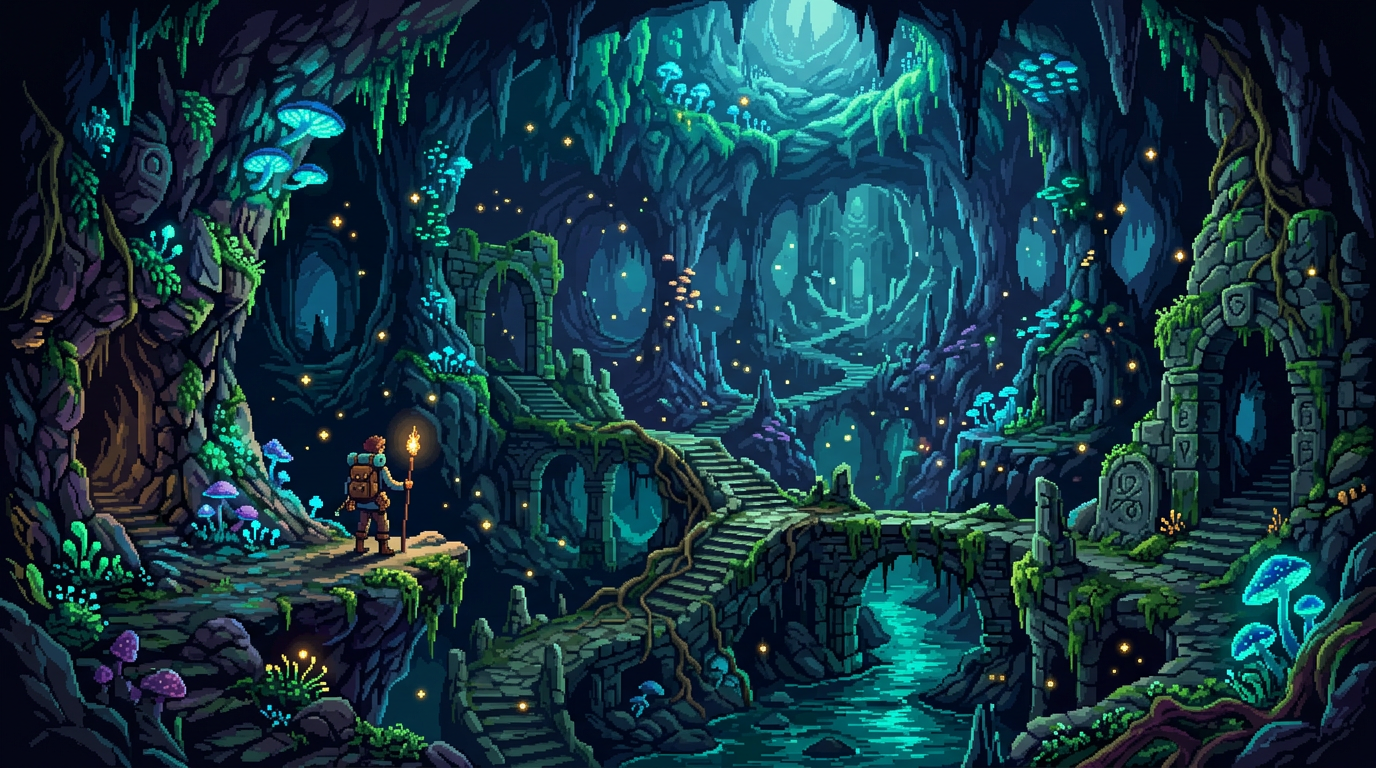
Animal Well creates an incredibly effective atmosphere with minimal resources. The pixel art is detailed but not flashy. The lighting system — using dynamic shadows and light sources — creates a sense of depth and mystery that feels far more sophisticated than it looks on paper.
The audio design deserves special attention. Instead of a constant soundtrack, the game uses:
- Ambient environmental sounds
- Animal calls and movements
- Mechanical noises from the world's mechanisms
- Strategic silence that amplifies key moments
This restrained approach creates tension and wonder. When music does appear, it has maximum impact because it's not competing with a constant backdrop.
4. The Meta-Puzzle Layer
Perhaps Animal Well's most impressive achievement is its meta-puzzle layer. Beyond the standard game completion, there are deeper mystery layers that require:
- Finding hidden collectibles scattered across the entire map
- Decoding environmental symbols and patterns
- Community collaboration to solve puzzles no single player could crack alone
- Understanding connections between seemingly unrelated game elements
This approach, inspired by games like Fez and The Witness, turns the game into an ongoing puzzle box that the community solves together over time. It transforms a 5-8 hour game into an experience that can occupy dedicated players for hundreds of hours.
5. Solo Development: Seven Years of Polish
Billy Basso worked on Animal Well for approximately seven years. During that time, he built a custom game engine, designed every puzzle, created all the art, and implemented a lighting system that rivals engines built by large teams.
Key takeaways from his development approach:
- Custom engine = total control — building his own engine allowed exact implementation of his vision, particularly the lighting system
- Long development is okay — seven years sounds daunting, but the result is a game with extraordinary density and polish
- Small scope, deep execution — the game world isn't large, but every corner is hand-crafted and meaningful
- Quality over quantity — fewer rooms with more secrets beats larger maps with less substance
6. Publisher Support: Bigmode
Animal Well was published by Bigmode, the game publishing label founded by YouTuber videogamedunkey. This gave the game significant visibility advantages:
- Built-in audience from Dunkey's YouTube channel
- A publisher with genuine passion for quality games
- Marketing reach that most solo developers simply can't achieve on their own
While not every indie developer can secure a publisher with a massive YouTube following, the lesson is clear: strategic partnerships amplify your work. Finding the right publisher or marketing partner can be as important as the game itself.
Lessons for Indie Developers
- Depth beats breadth — a small, dense game is more memorable than a large, shallow one
- Trust your players — don't explain everything. Let discovery drive engagement
- Atmosphere doesn't require expensive art — lighting, sound design, and careful composition create mood
- Design for community — puzzles that require collaboration create lasting engagement
- Polish takes time, and that's okay — a well-polished game stands out in a crowded market
- Every element should serve a purpose — no filler content, no wasted space
Animal Well shows that a single developer with patience, vision, and attention to detail can create something that stands alongside the best games in the industry — regardless of budget or team size.
Sources & Research Notes
This analysis of Animal Well draws on publicly available data and developer commentary.
- Steam Store Page — Player reviews, game information, and player metrics
- Billy Basso (Developer) — Developer interviews and commentary on the game's development
- Game Discovery & Puzzle Game Market Analysis — Industry analysis and puzzle game market context
- Metacritic & OpenCritic — Review aggregation and critical reception data
Note: This analysis is for educational purposes and presents our interpretation of the game's success factors.
Final Thoughts
Animal Well succeeds because every design decision serves the core experience of discovery and wonder. The pixel art, the lighting, the silence, the hidden layers — everything works together to create a world that feels alive with secrets.
For indie developers, it's a powerful example of what focused, patient development can achieve. You don't need a large team, cutting-edge graphics, or a massive scope. You need a clear vision, unwavering attention to detail, and the courage to trust your players to find the magic you've hidden in your game.