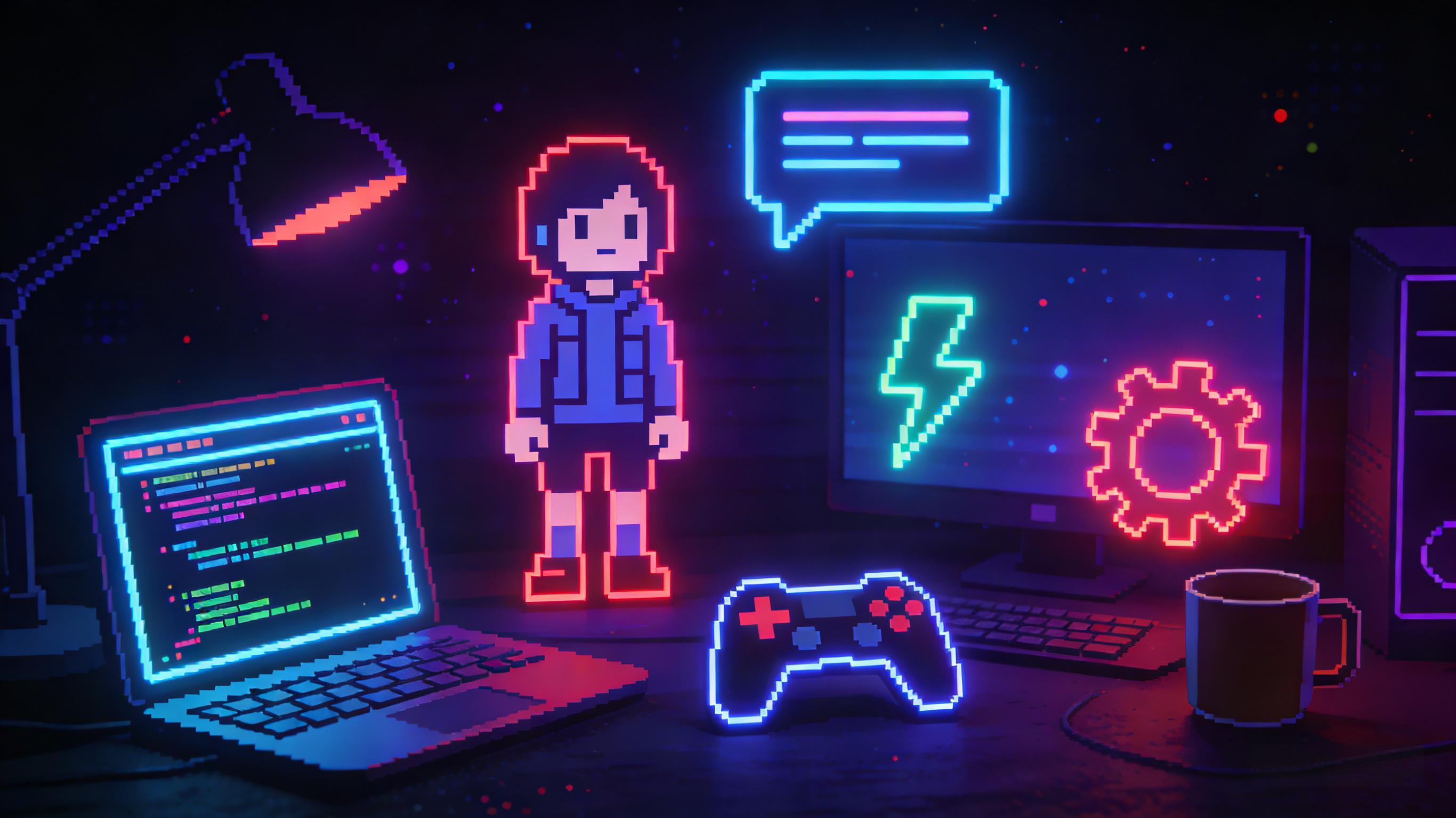
From Necessity to Choice: The Evolution of Pixel Art
In the early days of gaming, pixel art wasn't a choice — it was a necessity. Hardware limitations meant that games had to be built from limited color palettes and low-resolution sprites. The Nintendo Entertainment System (NES) could only display 25 colors on screen simultaneously. The Game Boy had just four shades of gray. Developers worked within these constraints because they had no other option.
But something interesting happened as hardware improved. When 3D graphics became possible, when high-resolution 2D art became feasible, pixel art didn't disappear. Instead, it evolved from a technical limitation into a deliberate artistic style — one that many developers and players actively prefer.
Today, pixel art games are more popular than ever. From Stardew Valley to Dead Cells, from Hyper Light Drifter to Eastward, pixel art continues to captivate audiences and define the indie game aesthetic. But why?
Reason 1: The Lowest Cost Art Style
Let's address the obvious first: pixel art is the most cost-effective art style available to indie developers. For solo developers or small teams working with limited budgets, this matters enormously.
Consider the alternatives:
- 3D modeling — Requires modeling, texturing, rigging, and animation skills, plus significant software costs
- High-resolution 2D — Every frame needs to be hand-drawn in detail, requiring professional illustration skills
- Vector art — Requires different skills and can look sterile if not executed well
- Photorealistic assets — Either expensive to create or generic when purchased
Pixel art, by contrast, can be created by a single developer with free tools like Aseprite or even open-source alternatives. A character sprite might be just 16x16 or 32x32 pixels — that's 256 or 1,024 individual pixels to color, compared to millions in a high-resolution image. This dramatically reduces the time and skill required to produce assets.
For a solo developer working alone, pixel art makes it possible to create an entire game's worth of visuals without hiring artists or spending years learning complex 3D software.
Reason 2: The Lowest Performance Cost
Cost isn't just about money — it's also about performance. Pixel art is the most performance-friendly art style available, and this matters for several reasons:
- Broader audience reach — Pixel art games can run on older computers, low-end laptops, and even mobile devices without issues
- Lower system requirements — More players can enjoy your game without needing expensive hardware
- Faster development iteration — Low-poly assets load quickly, making testing and iteration faster
- Smaller file sizes — Easier distribution and faster downloads
While AAA studios optimize for high-end hardware, indie developers benefit from reaching the widest possible audience. A pixel art game that runs smoothly on a decade-old laptop opens up a much larger potential player base than a game requiring a dedicated GPU.
Reason 3: Visual Consistency Is Guaranteed
Here's a truth that many developers learn the hard way: the most important quality of game art isn't beauty — it's consistency.
A game with mediocre but consistent art feels cohesive and professional. A game with occasionally brilliant art that clashes with itself feels amateur and jarring. Players might not consciously notice consistency, but they always feel its absence.
This is where pixel art shines. Once you establish a pixel size (16x16, 32x32, etc.) and a color palette, visual consistency becomes almost automatic. Every asset you create within those constraints will naturally fit together. It's actually difficult to make inconsistent pixel art if you're following the same specifications.
Contrast this with other art styles:
- Realistic 3D — Assets from different sources or artists can have subtly different styles, lighting responses, or detail levels
- High-resolution 2D — Line weights, shading styles, and color treatments can vary between assets
- Mixed media — Combining different art styles often creates visual chaos
With pixel art, the constraints themselves enforce consistency. A 16x16 sprite with a 32-color palette will look like it belongs with other assets created under the same constraints, regardless of who made them or when.
Reason 4: A Unique and Timeless Aesthetic
Pixel art has transcended its technical origins to become a legitimate art form with its own aesthetic appeal. Games like Eastward, Owlboy, and Hyper Light Drifter demonstrate that pixel art can be breathtakingly beautiful — not despite its limitations, but because of them.
The aesthetic qualities of pixel art include:
- Abstraction — Pixel art leaves room for imagination, allowing players to fill in details mentally
- Clarity — Limited resolution forces developers to prioritize readability and visual hierarchy
- Charm — There's an inherent warmth and nostalgia in pixel art that resonates with many players
- Timelessness — Pixel art doesn't age the way early 3D does; a great pixel art game looks as good today as it will in 20 years
Consider how early 3D games from the PlayStation 1 era look today — blocky, low-resolution textures, awkward animations. Now consider how Super Mario World or The Legend of Zelda: A Link to the Past look. The pixel art of those games remains visually appealing decades later, while early 3D often looks dated.
Reason 5: Nostalgia Meets Modern Design
For many players, pixel art evokes fond memories of childhood gaming. But modern pixel art games aren't just trading on nostalgia — they're combining retro aesthetics with modern game design sensibilities.
Games like Dead Cells use pixel art to create fluid, fast-paced action that would have been impossible on original hardware. Stardew Valley takes the Harvest Moon aesthetic and expands it with modern features and depth. Celeste combines pixel art with precise, challenging platforming and a deeply personal story.
These games prove that pixel art isn't a regression — it's a choice to embrace a particular aesthetic while pushing boundaries in other areas.
Reason 6: The Indie Game Identity
For better or worse, pixel art has become strongly associated with indie games. When players see a pixel art game, they immediately categorize it as "indie" — and for many players, that's a positive association.
This association brings certain expectations:
- Creative gameplay — Indie games are expected to innovate mechanically
- Personal vision — Indie games are seen as creator-driven projects
- Reasonable price — Pixel art games are often priced lower than AAA titles
- Community focus — Indie games often have dedicated, passionate fanbases
For indie developers, choosing pixel art isn't just an aesthetic decision — it's a signal to players about what kind of game they're making and what values it represents.
Case Studies: Pixel Art Excellence
Let's examine some games that demonstrate the diverse possibilities of pixel art:
Eastward
Eastward by Pixpil showcases pixel art at its most detailed and atmospheric. The game features rich environments, expressive character animations, and dynamic lighting — all rendered in pixels. It proves that pixel art can be as visually sophisticated as any other style when given the proper care and attention.
Hyper Light Drifter
Hyper Light Drifter uses pixel art to create a mysterious, ruined world without a single line of dialogue. The art style supports the game's themes of decay and discovery, with environments that reward careful observation and animations that communicate weight and impact.
Dead Cells
Dead Cells demonstrates how pixel art can support fast, fluid action. The game's combat animations are incredibly smooth, and the art style ensures that every enemy and attack is clearly readable even during intense battles.
Stardew Valley
Stardew Valley proves that pixel art can be cozy and inviting. The game's simple sprites and warm color palette create a sense of comfort that has attracted millions of players and kept them engaged for hundreds of hours.
Animal Well
Animal Well shows how pixel art can create atmosphere and mystery. The game's dark, detailed environments and subtle lighting effects demonstrate that pixel art can be just as evocative as high-resolution graphics.
The Technical Advantages
Beyond aesthetics, pixel art offers practical advantages for development:
Easier Animation
Animating a 16x16 sprite requires moving far fewer pixels than animating a high-resolution character. This makes animation more accessible to non-artists and reduces the time required to create smooth, appealing animations.
Scalability
Pixel art scales beautifully. A sprite designed at 1x resolution can be displayed at 2x, 3x, or 4x without losing quality — it just gets bigger. This simplifies development and ensures the game looks good at various resolutions.
Rapid Iteration
Because pixel art assets are small and simple, they can be created and modified quickly. This allows for rapid iteration during development — a crucial advantage for indie teams testing and refining their games.
Asset Creation by Non-Artists
Many successful indie games have been created by programmers who learned pixel art specifically for their projects. The barrier to entry is lower than for other art styles, allowing solo developers to create all their own assets.
When Pixel Art Might Not Be Right
Despite its advantages, pixel art isn't always the best choice. Consider alternatives if:
- Your game requires photorealism — Some concepts need realistic visuals to work
- You want to stand out from indie conventions — Pixel art is common in indie games; other styles might help you stand out
- Your target audience doesn't respond to pixel art — Some player demographics prefer other styles
- You have access to professional artists — If you can afford high-quality 3D or 2D art, those styles might better serve your vision
The Future of Pixel Art
Pixel art isn't going away. As tools improve and more developers embrace the style, we're seeing increasingly sophisticated pixel art games that push the boundaries of what's possible within the aesthetic.
AI tools are making pixel art creation even more accessible, with AI-assisted sprite generation and animation tools reducing the time required to create assets. This will likely lead to even more pixel art games in the future.
At the same time, the indie game community's embrace of pixel art has cemented its status as a legitimate artistic choice rather than a fallback option. Players now seek out pixel art games specifically, appreciating the aesthetic for its own qualities rather than tolerating it as a limitation.
Pixel art isn't a compromise — it's a commitment. A commitment to clarity, consistency, and a particular kind of beauty that emerges from constraints.
Final Thoughts
The question isn't why indie games use pixel art — it's why anyone would expect them not to. Pixel art offers the perfect combination of accessibility, performance, consistency, and aesthetic appeal for indie developers working with limited resources.
But beyond the practical advantages, pixel art has become a statement. It represents a choice to prioritize gameplay over graphical fidelity, to embrace constraints as creative catalysts, and to create games that are timeless rather than cutting-edge.
For many indie developers, pixel art isn't just an art style — it's part of their identity. It signals the kind of games they want to make and the values they want to express. And for millions of players, that signal is exactly what they're looking for.
So the next time you see a pixel art game, don't think of it as "retro" or "low-budget." Think of it as a deliberate artistic choice — one that carries with it decades of tradition, a passionate community, and a unique kind of beauty that no other art style can quite replicate.