Overview
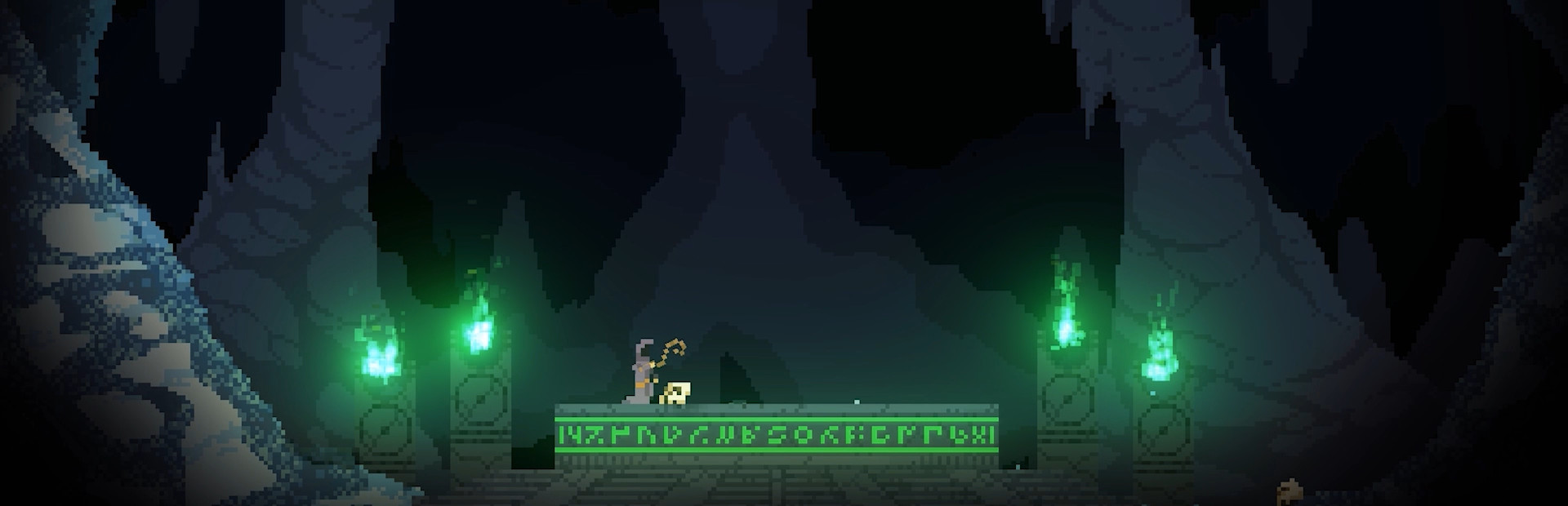
Noita is a roguelite where the world is one giant physics simulation: every pixel of oil, wood, acid, water and smoke exists individually and interacts with every other. You play a witch whose spells can flood a cave, vaporise a lake or set the entire level on fire — including yourself.
Built by Petri Purho, Olli Harjola and Ville Krumlinde of Nolla Games over roughly six years, it entered Early Access in September 2019 and released 1.0 on October 20, 2020 at $19.99, becoming one of the most distinctive roguelites ever made.
Gameplay
Noita's systems are its content: the falling-sand simulation creates emergent chemistry that no scripted level could, and wand crafting turns spell-casting into a programming puzzle.
- Fully pixel-simulated world: fire spreads, liquids flow, gases rise
- Wand building with modifiers that stack into absurd spell machines
- Procedurally generated biome chain from caves to parallel worlds
- Hidden secrets, alchemy and parallel-universe layers
- Brutal difficulty: your own creations kill you more than enemies do
- Active modding scene extending the simulation itself
Gallery
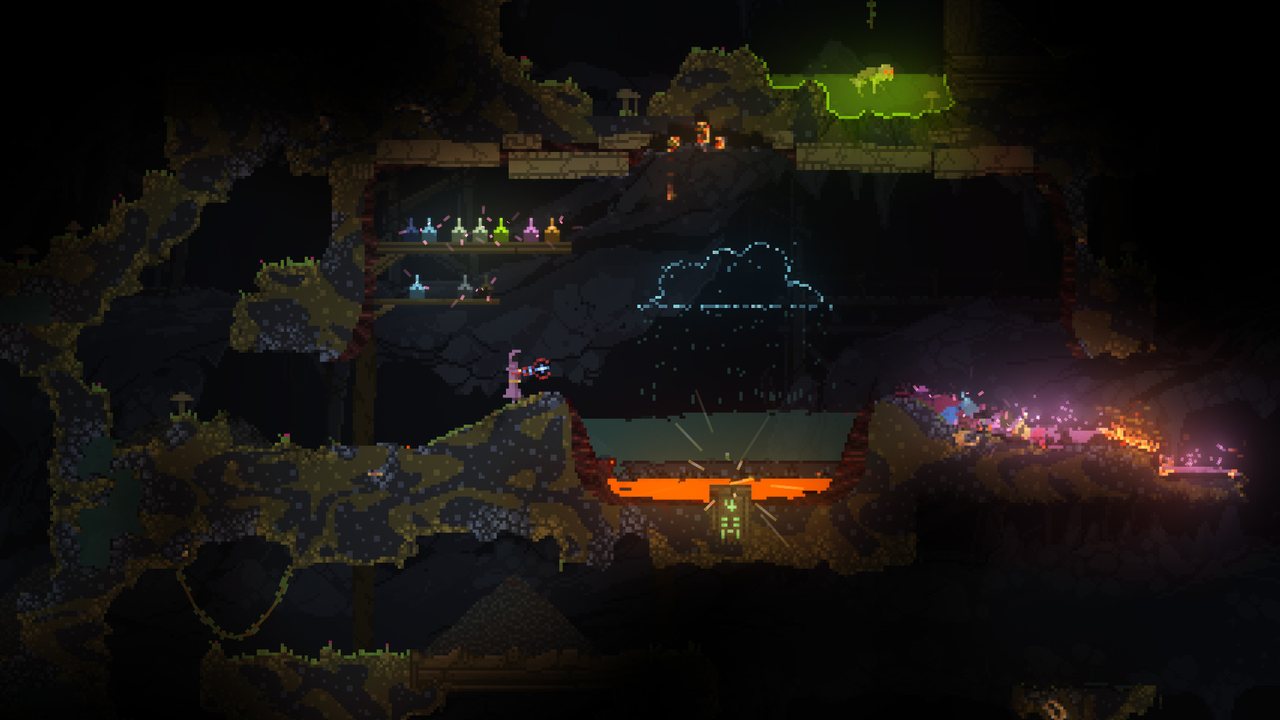
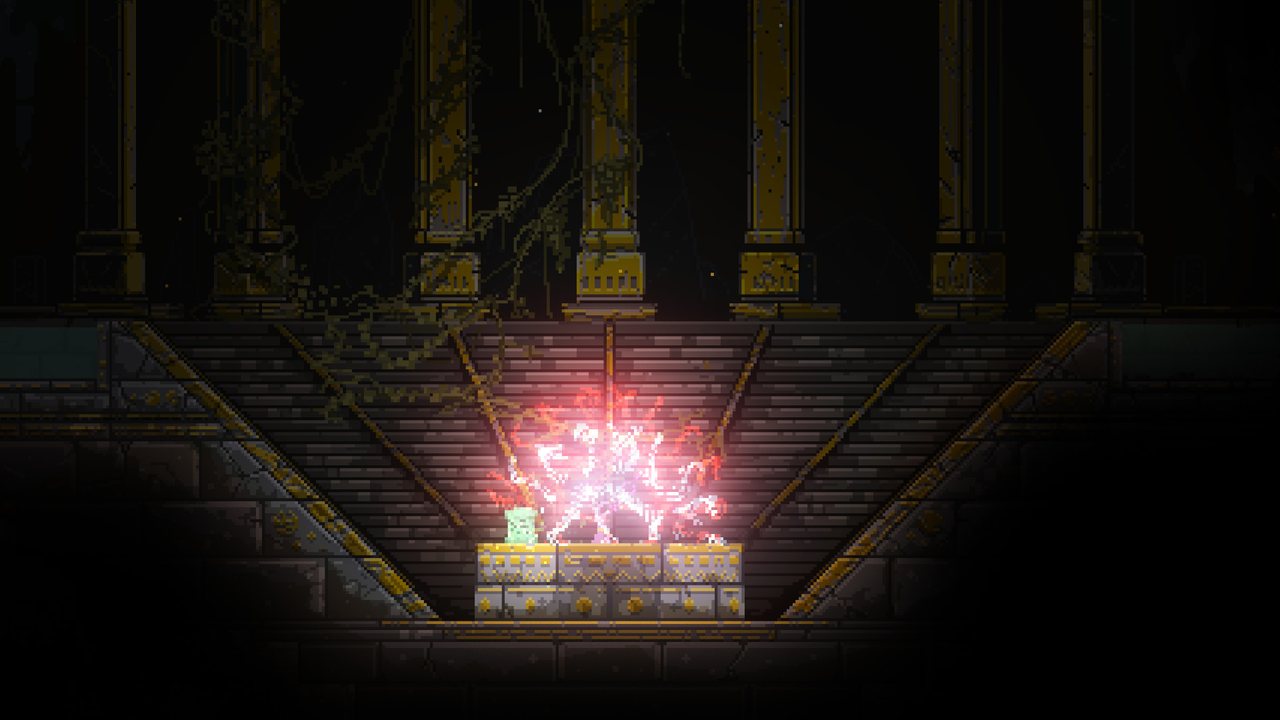
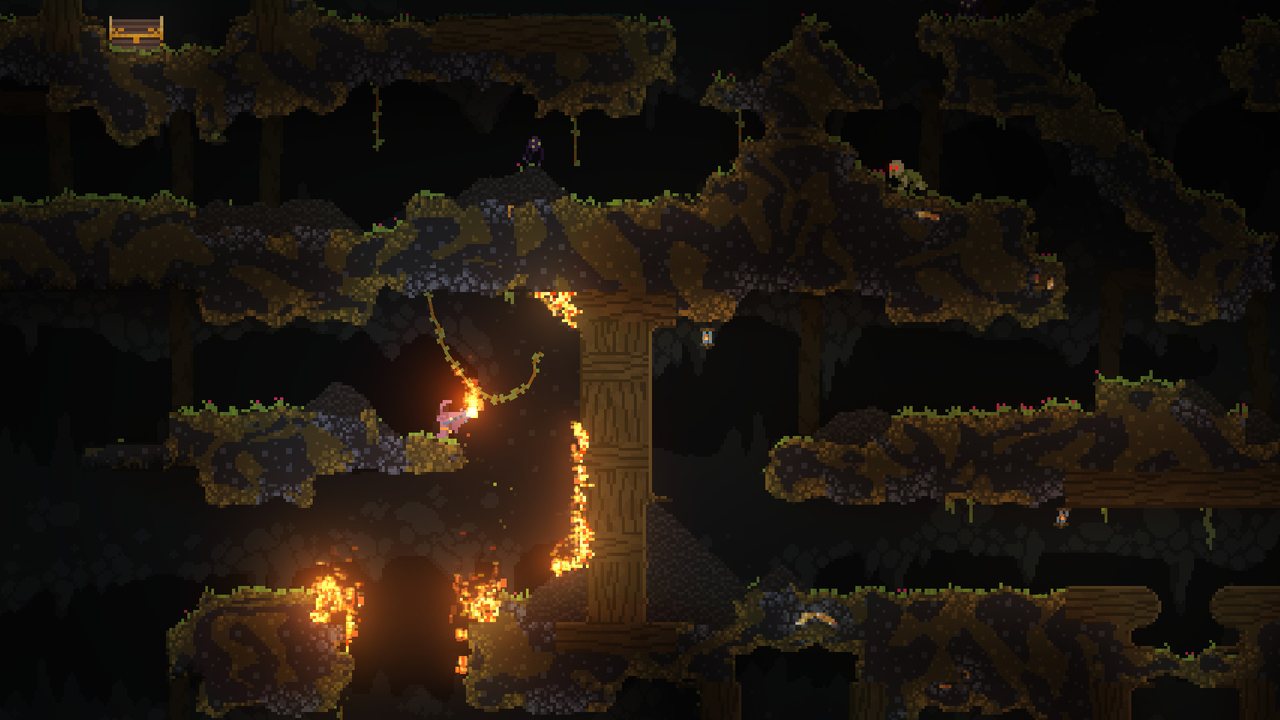
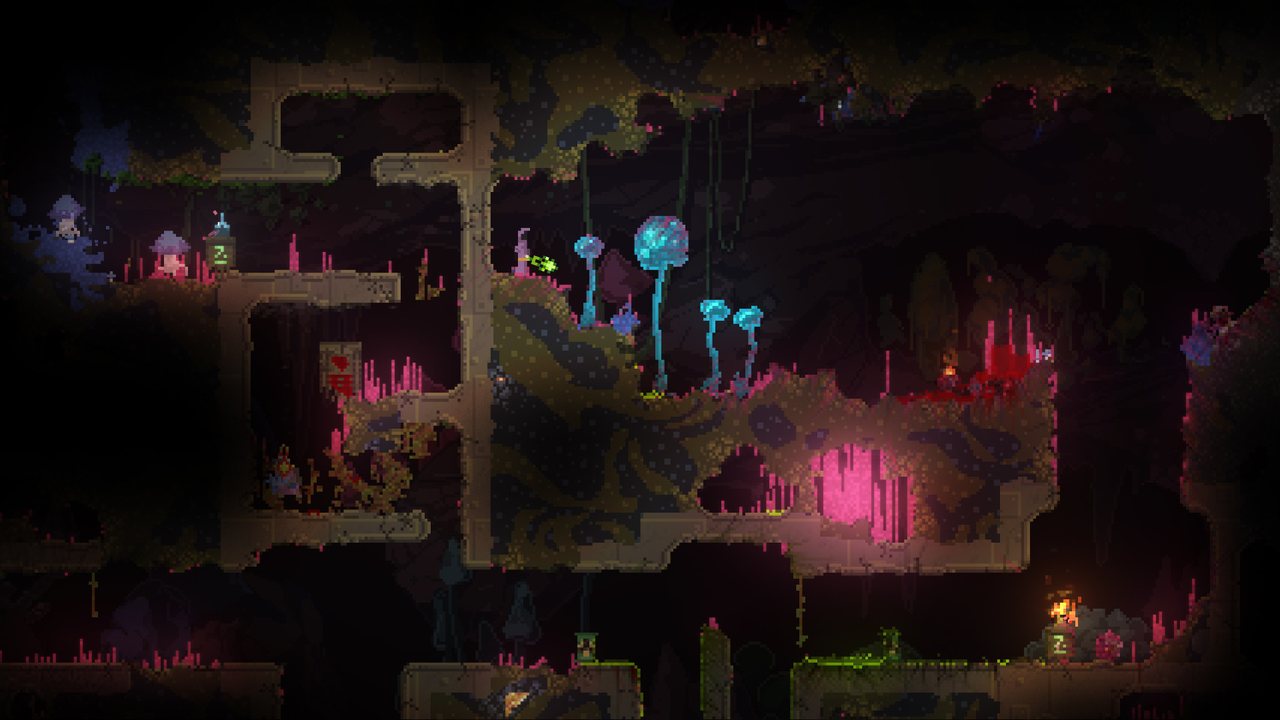
Images: official Steam store assets.
Development Story
Petri Purho — famous for Crayon Physics Deluxe and game-jam speed — wanted to test how far a pixel-physics simulation could go if it powered a full game. The team wrote a custom engine that simulates millions of individual pixels at interactive framerates, a problem that took years of engineering.
Nolla embraced the simulation's chaos instead of taming it: the designers accepted that players would die to their own spells and leaned into it, making self-destruction a core part of the game's identity. The result is a game whose depth is discovered, not authored.
Why It Succeeded
Noita passed 50,000 Steam reviews at 92% positive — implying an estimated two million or more copies sold — on a three-person team with a custom-built engine. It became the reference point for simulation-driven roguelites and one of the most-streamed physics disasters on the platform.
- 50K+ Steam reviews at 92% positive
- Est. 2M+ copies sold (review-based estimate)
- Custom engine simulating every pixel in real time
- Six years of development by three people
- Spawned a wave of physics-driven roguelite imitators
Lessons for Indie Developers
- A bespoke engine is a moat: nobody can copy six years of simulation work quickly.
- Emergent systems create depth without content expansion.
- Let your simulation kill the player — chaos is the memorable feature.
- Spell-crafting as programming creates infinite player-made content.
- Small teams can own a niche if the core technology is unique.