Overview
Slay the Spire is a roguelike deckbuilder: you climb a procedurally generated spire, fight turn-based card battles, and build a deck from what the run gives you. Death is permanent, but every failed run teaches you something that carries into the next one.
It was created by Mega Crit, a Seattle studio founded in 2015 by Anthony Giovannetti and Casey Yano after they left their day jobs. It entered Steam Early Access on November 15, 2017 and reached full release on January 23, 2019. In the process it defined the modern roguelike deckbuilder: almost every card-based roguelike since — including Balatro — cites it as a foundation.
Gameplay
The design goal was "not a single dead card". Each character has roughly 75 cards, and enemies telegraph their next move with the Intents system, so the randomness of a roguelike becomes a puzzle about risk instead of a dice roll.
- Four radically different characters with separate card pools
- Intents icons that show exact enemy damage before you commit
- Over 300 relics with stacking, run-warping effects
- Three acts, branching maps, elite fights and shops
- Ascension 1-20 escalating difficulty for veterans
- Daily climb mode with fixed seeds for shared competition
Gallery
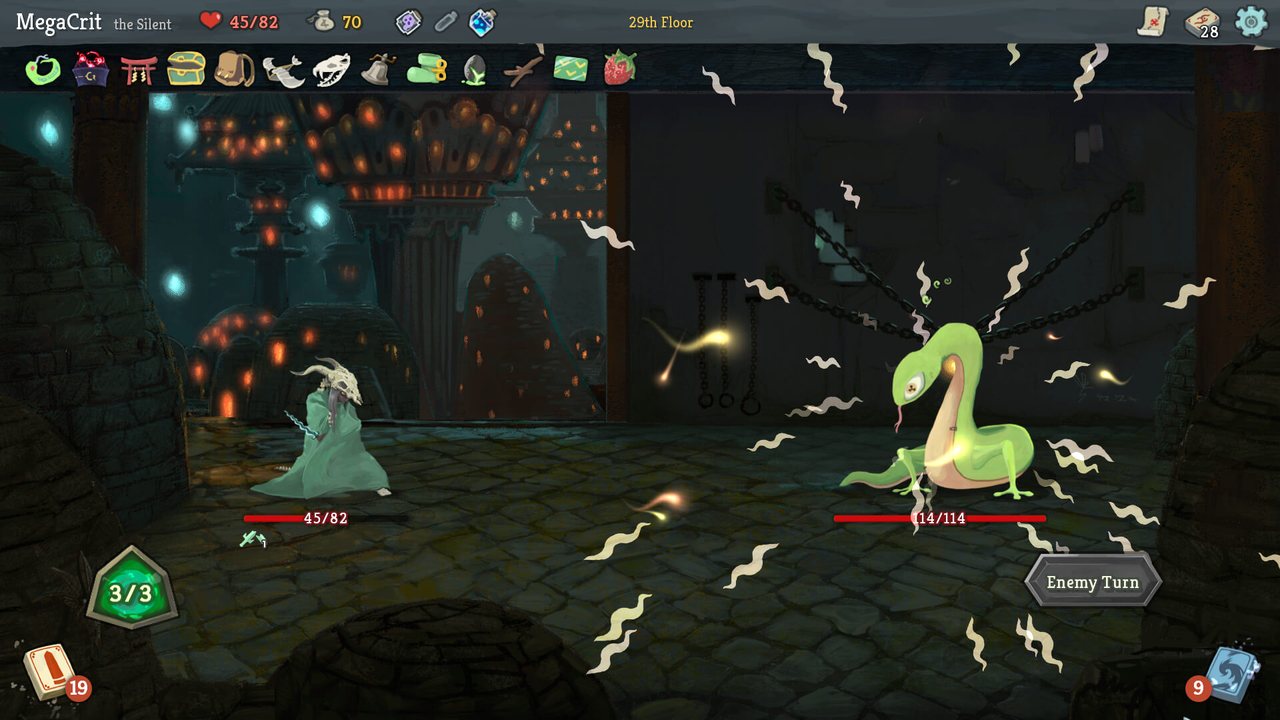
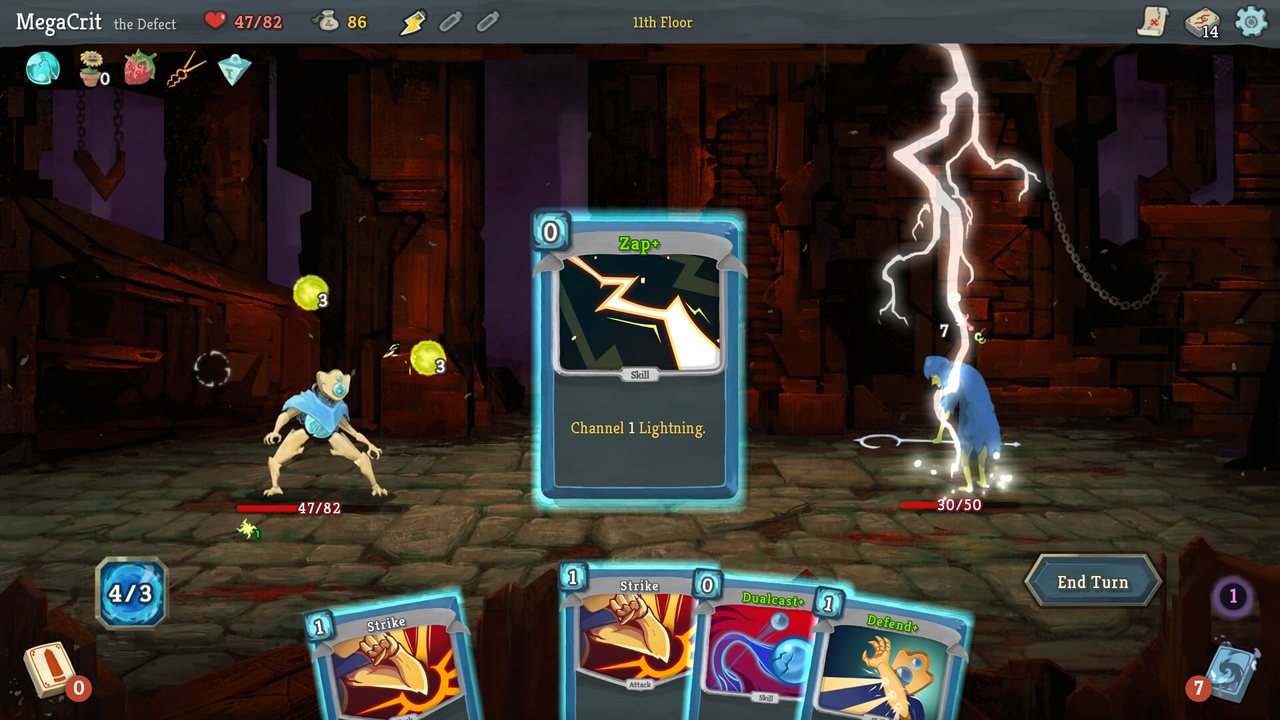
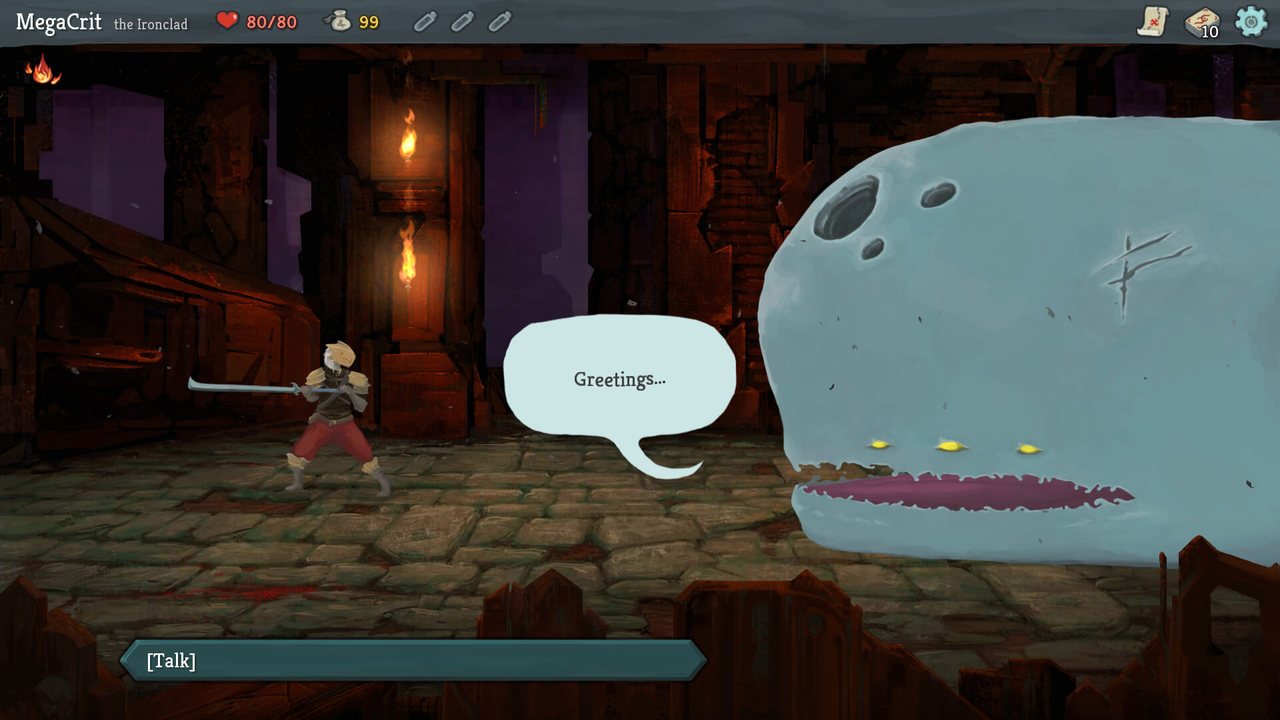
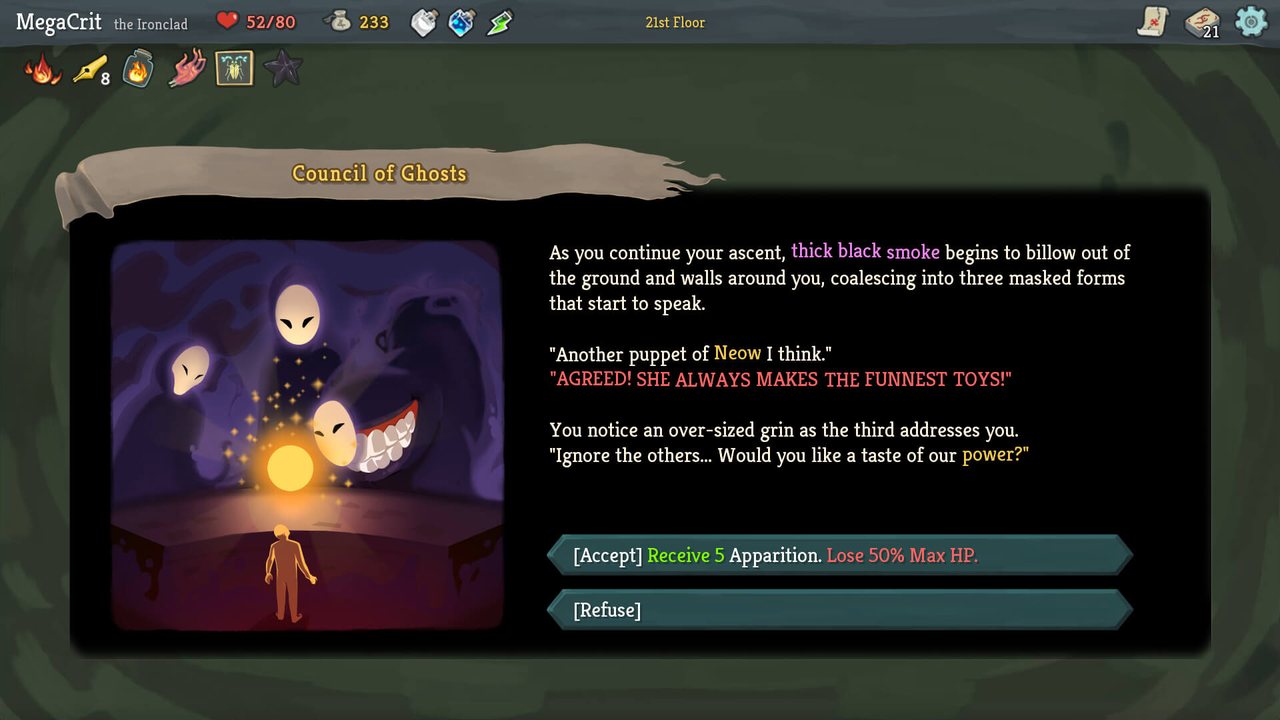
Images: official Steam store assets.
Development Story
Giovannetti and Yano met at university and founded Mega Crit in 2015. Their goal was to fuse deck-building board games such as Dominion with roguelike structure, using branching paths inspired by FTL. The game was built on the libGDX framework by a core team of two.
Early Access began in November 2017 with two playable characters and, at first, almost nobody noticed: roughly 200 copies on day one. A Chinese streamer with a large audience then played it on stream, and it became the second best-selling game on Steam worldwide for the week ending January 21, 2018. The developers kept shipping weekly updates through Early Access, adding potions, events and a third character, and shipped the 1.0 release on January 23, 2019.
Why It Succeeded
Slay the Spire crossed one million copies sold by mid-2018 and 1.5 million by March 2019. Mega Crit has not published official figures since, but third-party tracking estimates around 6.6 million Steam owners and about $164 million gross revenue as of 2025. It holds an "Overwhelmingly Positive" rating at roughly 98% across more than 180,000 Steam reviews, and China accounted for 43% of early units despite launching without localisation.
- About 200 copies on day one; 1M by mid-2018; 1.5M by March 2019
- Est. 6.6M Steam owners by 2025 (third-party estimate)
- About 98% positive across 180,000+ Steam reviews
- Peak of over 57,000 concurrent players in December 2025
- Named Best Design of 2019 by PC Gamer; IGN Best Strategy Game of 2019
Lessons for Indie Developers
- Fusing two familiar systems can be worth more than inventing one brand new thing.
- Telegraphing enemy intent removes frustration and creates real decisions.
- No localisation is not a reason to assume no market — China carried the early sales.
- Weekly Early Access updates let the community balance your game with you.
- Owning and self-publishing your IP keeps a two-person team in control for a decade.