Overview
FTL: Faster Than Light puts you in command of a small starship fleeing a much larger enemy fleet. Each jump takes you deeper into hostile space and into random encounters: pirate ambushes, derelicts, civil-war standoffs. Fires spread through your decks, boarders teleport in, and your crew members are individuals who can suffocate one at a time while you reroute power.
Designed by Justin Ma and Matthew Davis of Subset Games, it launched on September 14, 2012 at $9.99 after a Kickstarter that asked for $10,000 and raised $200,556. It became the reference point for an entire family of roguelike crew- and ship-management games.
Gameplay
The loop is short, brutal and endlessly variable. A run is a series of jumps through procedurally generated sectors, and every system on the ship is a resource to be traded against the others.
- Real-time pauses: plan every second of a firefight
- Individual crew members with skills, races and mortality
- Power management across shields, engines, weapons and oxygen
- Permadeath runs ending in sector eight against the Rebel Flagship
- Ship unlocks, augments and crewing builds as the long-term hooks
- Free Advanced Edition (2014) added systems without changing the price
Gallery
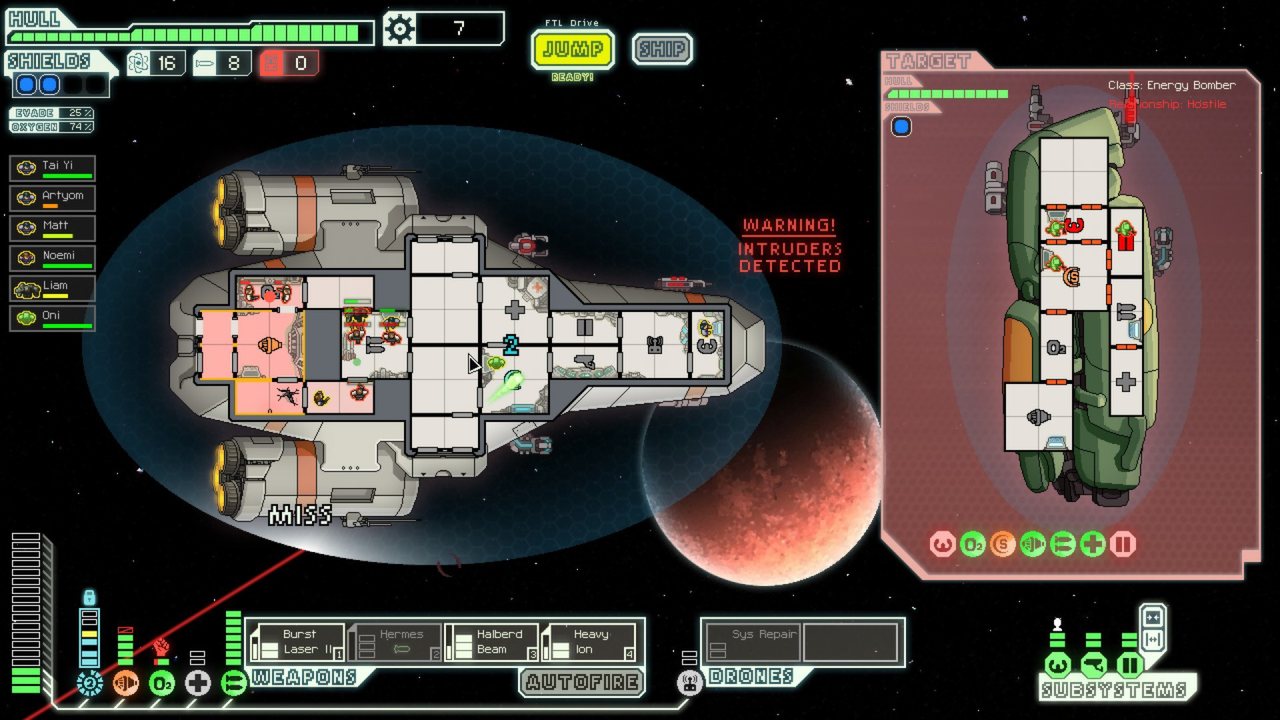
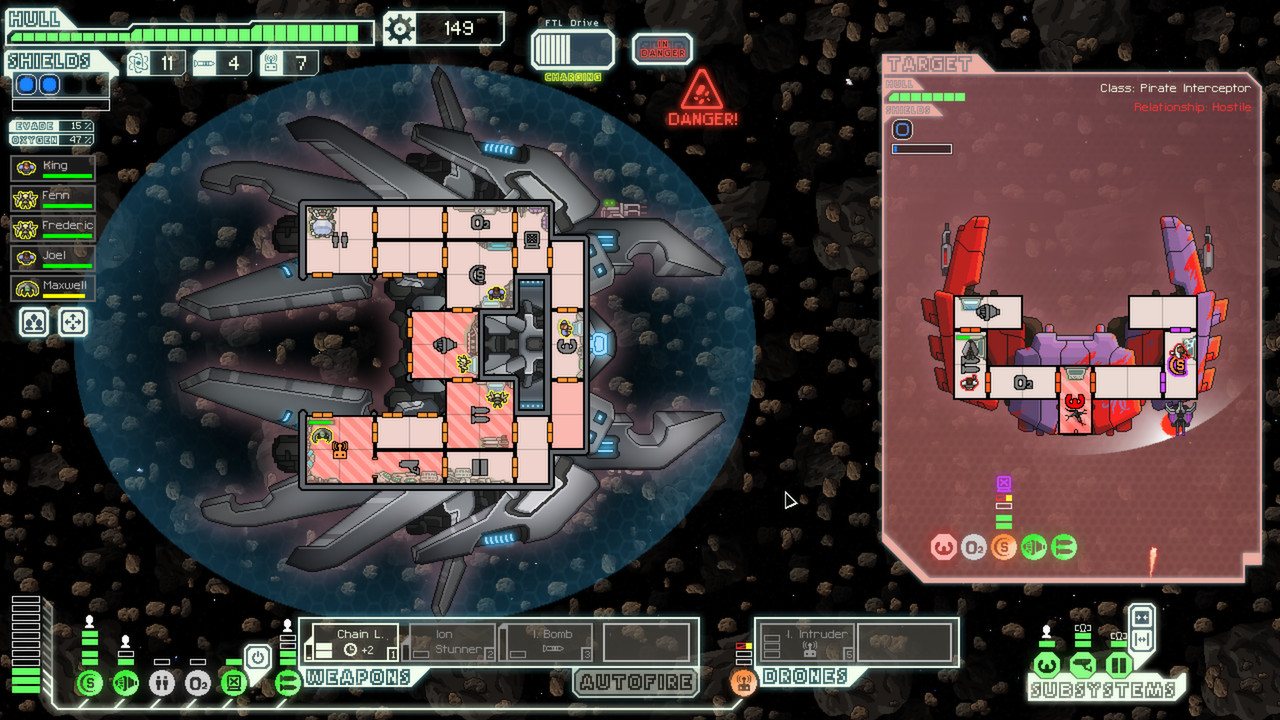
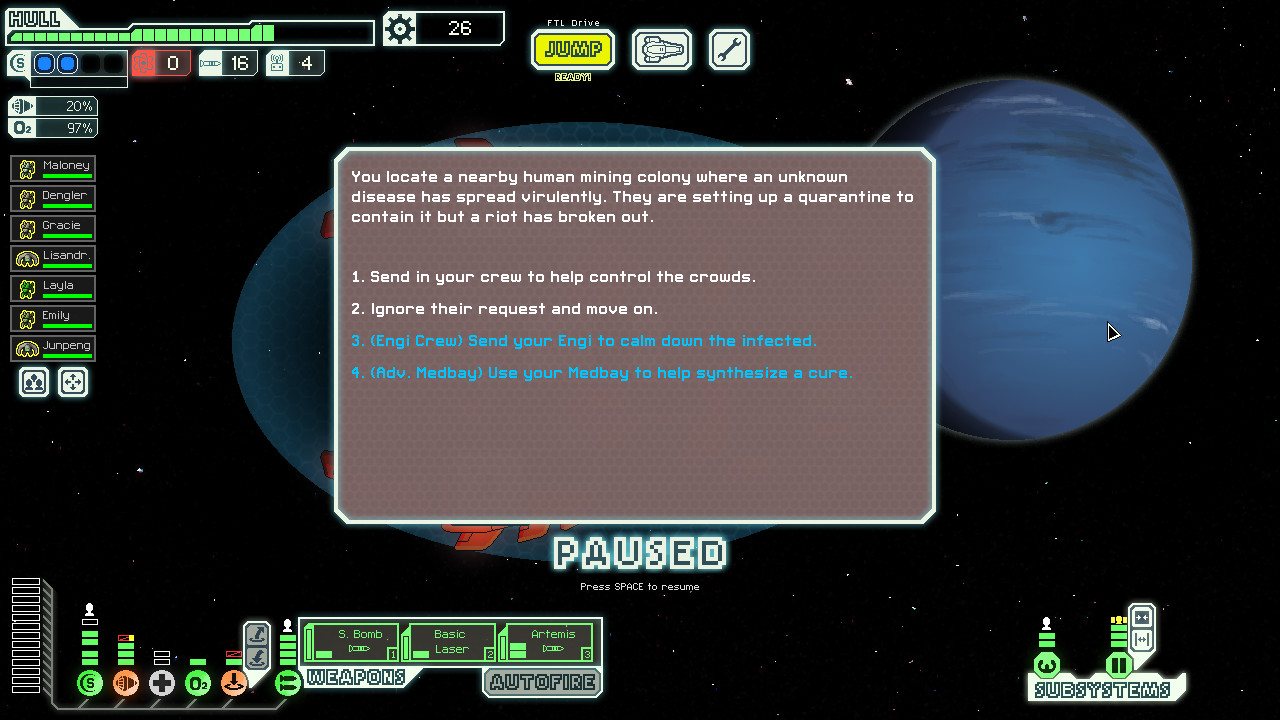
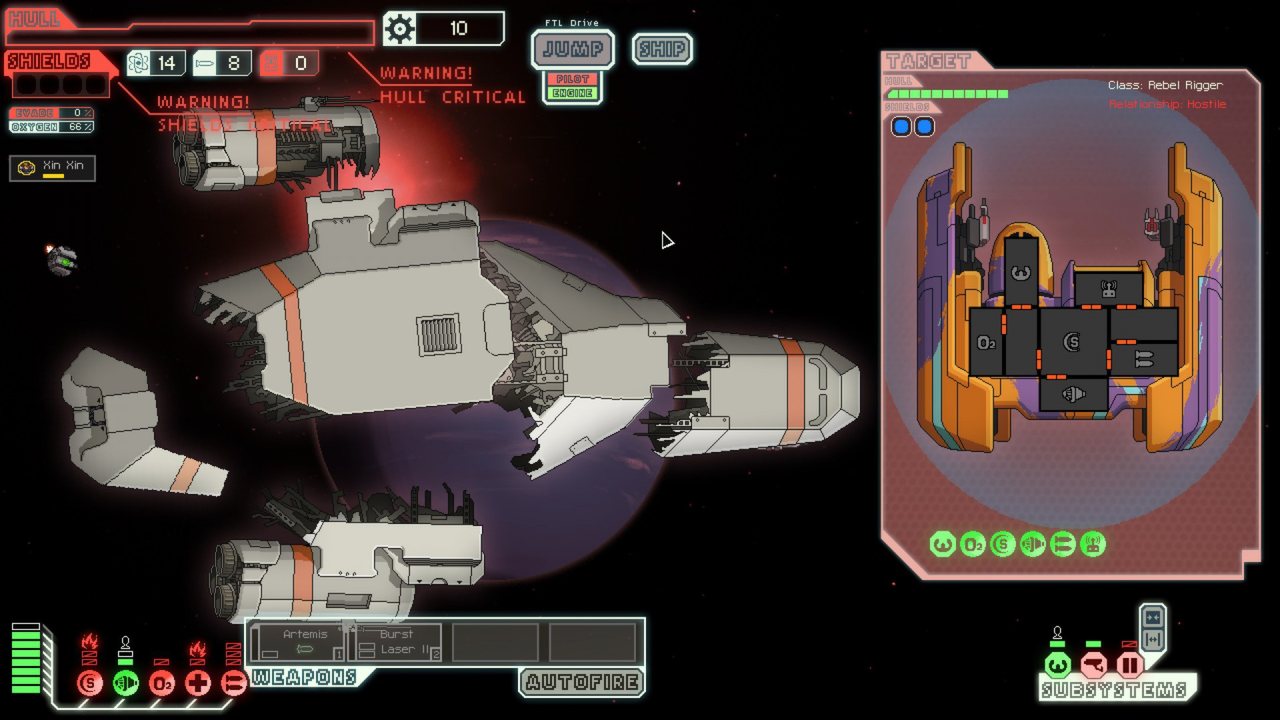
Images: official Steam store assets.
Development Story
Subset Games was exactly two developers: Justin Ma on art and design, Matthew Davis on code, with composer Ben Prunty completing the trio. The original prototype existed before the Kickstarter, which let them show the actual game rather than a pitch — a factor often credited for the campaign outrunning its goal by twenty times.
The budget was deliberately small and the scope matched it: a 2D top-down ship, simple pixel art, and depth bought through systems rather than content. Instead of expanding the team after the windfall, the pair shipped the base game on schedule and later released the Advanced Edition as a free update, which protected the goodwill that keeps the game selling a decade later.
Why It Succeeded
FTL sold an estimated two million or more copies across PC, iPad and Android, on a budget that never approached a tenth of its revenue. Its critical reception turned a modest tactics game into one of the defining indie releases of 2012, and its influence is visible in everything from Into the Breach (the same designers' second game) to a wave of starship roguelikes that borrowed its pause-and-allocate rhythm wholesale.
- Raised $200,556 on a $10,000 Kickstarter goal
- Est. 2M+ copies sold across PC, iPad and Android
- Named in numerous best-of-2012 lists and game-design lectures
- Advanced Edition shipped free in 2014, sustaining word of mouth
- Directly inspired the crew-sim roguelike niche that followed
Lessons for Indie Developers
- Show a playable prototype in your crowdfunding campaign, not a promise.
- Systems depth can replace content volume when your budget is two people.
- A free major update years later can re-sell an old game better than a sequel.
- Permadeath with short runs makes failure cheap and one-more-jump addictive.
- Stay small after success: the two-person scope was the margin, not the limit.